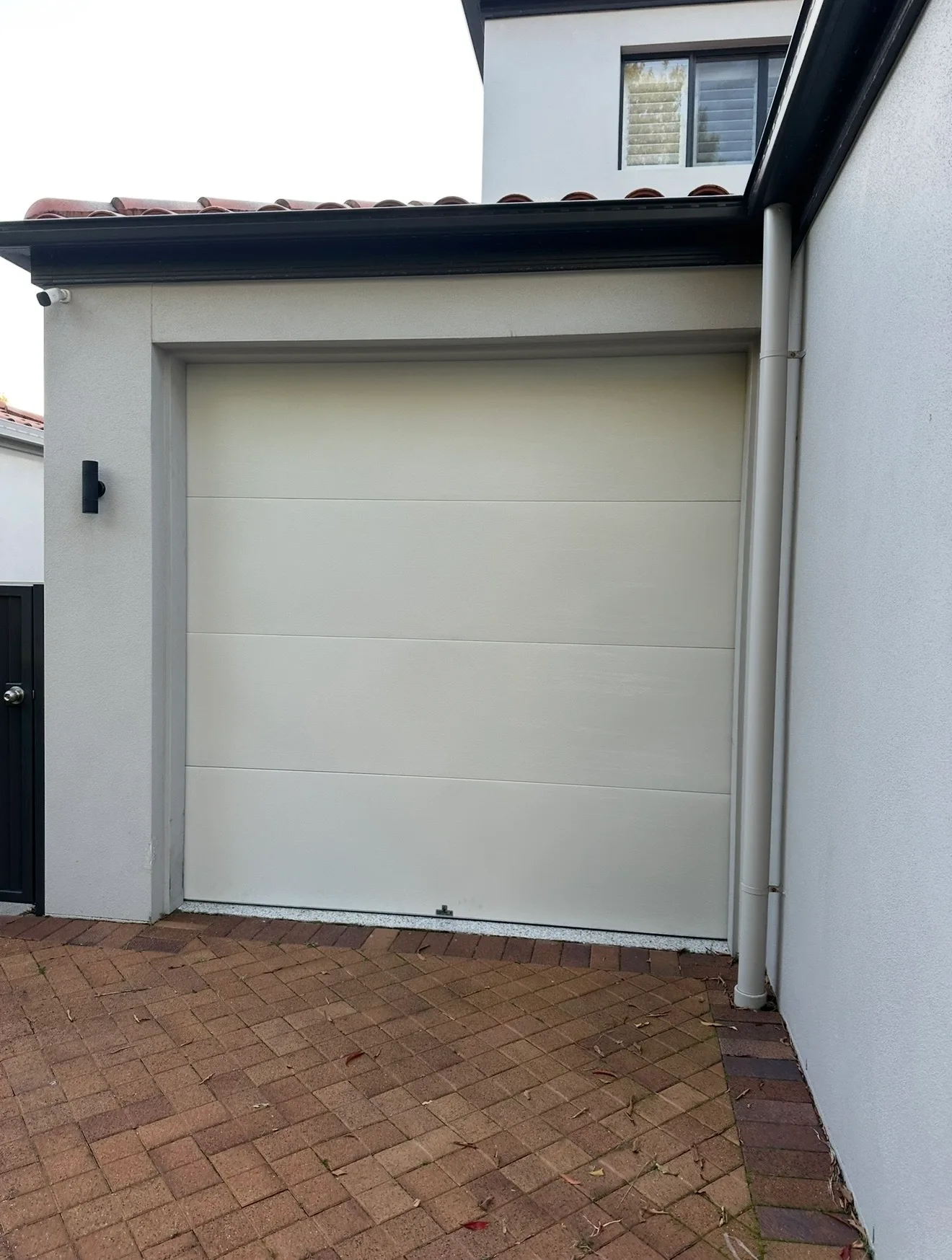
A garage door that makes a loud noise when opening and closing almost always has one of five problems: worn rollers (grinding), dry springs and hinges (squeaking or screeching), loose hardware (rattling), a bent or misaligned track (scraping), or a failing opener motor (rumbling). Squeaks and rattles are usually fixed with lubrication and a socket set. Grinding, scraping and any sudden loud bang point to worn or broken components under tension — a snapped torsion spring makes a single gunshot-like bang — and those need a technician.
Below, each noise is broken down by what it sounds like, what causes it, what you can safely fix yourself, and when to bring in a technician. For pricing, call — we can usually quote it over the phone from your description of the sound.
First: Is the Noise a Safety Problem?
Loud banging or heavy grinding can indicate a failing torsion spring or a snapped cable. Both are under extreme tension, and a door with a broken spring can weigh over 100 kg with nothing holding it — it can fall and injure someone or damage a car. These are not DIY repairs.
If the noise started suddenly, or the door feels heavier than usual, stop using it and call a technician.
Not sure if it's dangerous? Call and describe the noise — we'll tell you over the phone, free: 0434 099 873
Garage Door Noise Types at a Glance: Cause, DIY or Pro, and the Fix
| Noise type | Likely cause | DIY or Pro | The fix |
|---|---|---|---|
| Squeaking / screeching | Dry rollers, hinges or springs | DIY first — lubricate | Lubricate; full service if it returns |
| Grinding / scraping | Worn rollers, misaligned track, worn motor gears | Technician — call 0434 099 873 | Roller replacement or track adjustment |
| Rattling / vibrating | Loose bolts, chain or panels | DIY first — tighten | Tighten hardware; service if it persists |
| Single loud bang | Snapped torsion spring | Technician only — stop using the door — call 0434 099 873 | Spring replacement (matched pair) |
| Slapping / flapping | Loose or frayed cable | Technician only — call 0434 099 873 | Cable replacement |
| Rumbling / roaring | Worn motor bearings, unbalanced door | Technician — call 0434 099 873 | Rebalance, or motor replacement if worn out |
| Clicking / ticking | Locked door, obstruction, motor limits | Check locks first, then technician | Opener adjustment |
Wondering what your fix will cost? Call 0434 099 873 for a fast quote — we can usually price it over the phone. Every job is quoted upfront before work begins — no call-out surprises.
Why Is My Garage Door Squeaking or Screeching?
What it sounds like: a high-pitched squeak or screech every time the door moves, often worse on cold mornings.
What causes it: metal-on-metal friction from dry hinges, unlubricated roller bearings or a dry torsion spring. On the Gold Coast, salt air strips lubrication faster than inland — coastal doors often start squeaking within months of a service.
DIY or technician: DIY first. Lubricate hinges, roller bearings, springs and bearing plates with a silicone or lithium-based garage door lubricant (see the DIY section below). If the squeak returns within days, the rollers or hinges are worn out — garage door repairs like a roller swap are quick and inexpensive.
Why Is My Garage Door Grinding When Opening or Closing?
What it sounds like: harsh grinding or metal scraping while the door travels, sometimes with visible juddering.
What causes it: worn or cracked rollers dragging instead of rolling, a bent or misaligned track forcing the door to scrape through, or stripped gears inside the opener motor. Grinding is components actively wearing each other out — every cycle does more damage.
DIY or technician: technician. Track realignment done wrong can pull the door off its tracks entirely. Our cable and track repair service covers realignment, and worn rollers are replaced as a set — call for a fast quote; we can usually price it over the phone.
Why Is My Garage Door Rattling and Vibrating?
What it sounds like: a metallic rattle or shudder through the whole door while it runs.
What causes it: loose hardware. Hundreds of open-close cycles vibrate nuts, bolts, hinge screws, chain tension and motor mounting brackets loose over time.
DIY or technician: DIY first. Work along the door with a socket set and tighten every visible bolt and hinge screw (don't touch the red-tagged spring or cable fittings). Check the opener chain for slack. If the rattle persists, panels or brackets may be worn — book a garage door serviceand we'll go through the whole system.
What Does a Loud Bang From the Garage Door Mean?
What it sounds like:a single, sudden bang — like a gunshot or a plank dropping — often when nobody is using the door. Afterwards the door feels extremely heavy or won't open more than a few centimetres.
What causes it: a snapped torsion spring, and occasionally a snapped cable or a door jumping its track. The spring stores the energy that lifts the door; when it breaks, that energy releases all at once.
DIY or technician: technician only — do not operate the door. The motor alone can't safely lift an unsprung door and will burn out trying. Professional spring replacement is fitted as a matched pair, and we carry stock for same-day replacement — call for a fast quote; we can usually price it over the phone. If this just happened to you, see our guide: loud bang and now the garage door won't open.
Why Is My Garage Door Motor Rumbling or Roaring?
What it sounds like: a deep rumble or roar from the opener unit on the ceiling, not from the door itself.
What causes it: worn motor bearings, a loose mounting bracket, or — most often — an unbalanced door forcing the motor to haul weight the springs should be carrying.
DIY or technician: technician. Door balance and spring tension adjustments are tension work. We service and repair all the common Australian opener brands — B&D, Merlin, ATA, Steel-Line, Gliderol and Centurion. If the motor is 10+ years old, read our guide on when to replace your motor.
Why Is My Garage Door Clicking but Not Opening Smoothly?
What it sounds like: rhythmic clicking or ticking from the opener, often with the door hesitating or stopping.
What causes it: the motor hitting resistance — a manually locked door, an obstruction in the track, worn drive gears or misadjusted travel limits.
DIY or technician:check the manual lock and the track for obstructions first. If the door is unlocked and clear but still clicks, the opener needs adjustment or repair — that's a technician visit.
What Happens if You Ignore a Noisy Garage Door?
Noise is early warning, and the maths of waiting is unkind:
- Worn rollers left grinding chew into the tracks and hinges — once the track bends, a quick roller swap turns into track work and often panel damage on top, costing several times more.
- An unbalanced, rumbling door overworks the opener until it burns out — a new motor costs several times more than the simple service that would have rebalanced the door.
- A worn spring that snaps after hours adds an emergency call-out premium on top of the standard replacement price — and usually traps a car in the garage while you wait.
How to Fix a Noisy Garage Door Yourself (Safe DIY Steps)
Two DIY jobs fix the majority of squeaks and rattles, and both are genuinely safe:
Safe to DIY
- Lubricate (every 3–6 months): use a silicone-based or lithium-based garage door lubricant— never WD-40, which is a degreaser and strips lubrication. Spray hinges, roller bearings, springs, bearing plates and the motor chain or screw drive. Wipe tracks clean but don't lubricate them — grease in the track attracts grit.
- Tighten visible hardware (every 6 months): hinge bolts, track brackets and the motor rail with a socket set. Snug, not gorilla-tight — overtightening strips the thread in the door skin.
The Hard Line: Technician Only
Springs, cables and track realignment are not DIY jobs — no exceptions. Torsion springs and lift cables hold the door's full weight under tension, and releasing that tension incorrectly causes serious injuries every year. If your noise diagnosis points at any of these, that's the moment to call 0434 099 873.
Describe the Noise, Get a Diagnosis — Free, Over the Phone
Here's the shortcut: in most cases we can identify the problem from your description of the noise — and give you a quote — before we've even arrived. A squeak, a grind and a bang each narrow the fault down to one or two components. That means no obligation and no guessing: describe the sound, hear what it likely is and what it costs, then decide.
Fortex Door Services repairs and services garage doors across the Gold Coast — including Burleigh Heads, Robina and Helensvale— with upfront pricing, same-day availability, and every major door and opener brand covered: B&D, Merlin, ATA, Steel-Line, Gliderol and Centurion.
Frequently Asked Questions
Why does my garage door make a loud noise when opening?
A garage door that is loud when opening usually has worn rollers, dry hinges, unlubricated torsion springs or loose hardware. Squeaking points to lubrication, grinding to worn rollers or track misalignment, and rattling to loose bolts. Lubricate and tighten first; if the noise persists, have a technician inspect the door.
Why is my garage door grinding when it closes?
Grinding when closing usually means worn or damaged rollers dragging in the track, a bent or misaligned track, or worn gears inside the opener motor. Grinding is metal wearing against metal, so continuing to use the door makes the damage worse. Stop using the door and book a technician to inspect it.
Is a noisy garage door dangerous?
It can be. A sudden loud bang usually means a snapped torsion spring, and grinding can signal a failing cable or track — all under high tension. If the noise started suddenly or the door feels heavier than usual, stop using it and call a garage door technician for an inspection.
How much does it cost to fix a noisy garage door?
The price depends on what is causing the noise — a simple lubrication service costs far less than roller, spring or motor replacement — plus your door type, spring size and whether parts are needed. Call 0434 099 873 and describe the noise; we can usually give you a fast, free quote over the phone.
Can I fix a squeaky garage door myself?
Often, yes. Apply a silicone or lithium-based garage door lubricant to the hinges, roller bearings, springs and bearing plates, and tighten any visible loose bolts. If squeaking returns within days, the rollers or hinges are likely worn out and need replacement, which is a quick, inexpensive job for a technician.
Should I lubricate my garage door and with what?
Yes — every 3 to 6 months, and every 3 months in coastal Gold Coast suburbs where salt air accelerates wear. Use a silicone-based or lithium-based garage door lubricant on hinges, rollers, springs and bearing plates. Never use WD-40 as a lubricant; it is a degreaser and strips existing lubrication.
Why did my garage door make a loud bang?
A single loud bang from the garage — often when the door is not even moving — is the classic sound of a torsion spring snapping. The door will feel extremely heavy and may not open. Do not operate it; a broken spring is dangerous and needs professional replacement. Call for a fast quote — we can usually price it over the phone.
Why is my garage door rattling and vibrating?
Rattling usually means loose hardware — nuts, bolts, hinges or the motor chain have vibrated loose over hundreds of open-close cycles. Tighten what you can reach with a socket set and check the chain tension. If the rattle continues, a technician can check the panels, brackets and motor mounting.
Stop the Noise Today — Gold Coast Wide, Same-Day Available
Describe the noise over the phone and we'll tell you what it likely is and what it'll cost — free, before we arrive. Upfront pricing, no call-out surprises, emergency and same-day service across all Gold Coast suburbs.
Call now: 0434 099 873 or request service online
Prefer not to call? Get a quick quote instead:
Request a free quote — we'll call you back
Related Articles
Annual Garage Door Maintenance Checklist
Complete maintenance guide to keep your garage door in top condition and prevent noisy operation.
Garage Door Roller Replacement Guide
Worn rollers are the most common cause of grinding — when to replace them and what's involved.
5 Warning Signs Your Garage Door Needs Repair
Identify common warning signs before they become expensive emergencies.
Replace Your Spring Before It Snaps
Warning signs a spring is failing, and why replacing it early beats an emergency call-out.