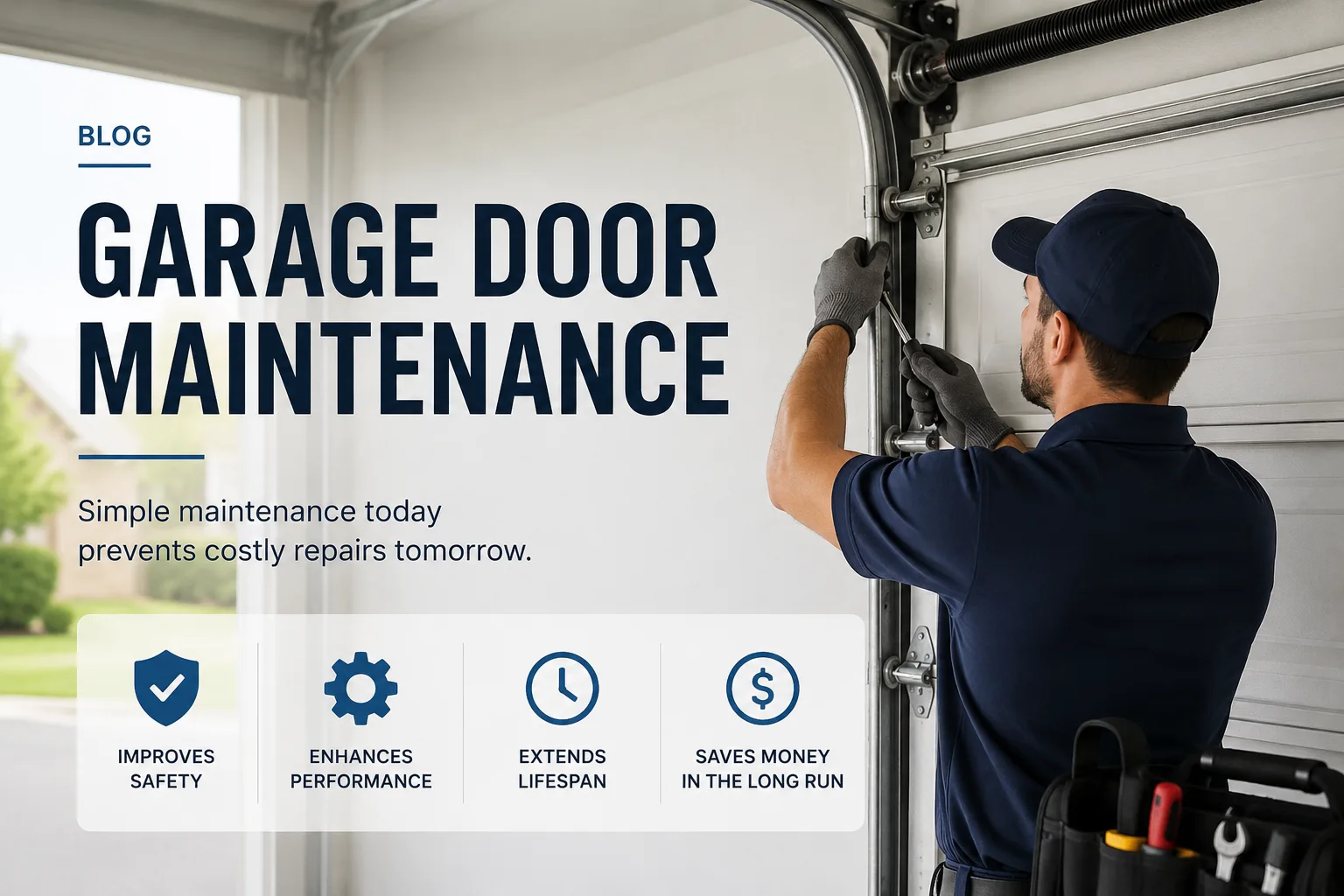
Your garage door is one of the hardest-working moving parts in your home. Regular maintenance helps prevent costly breakdowns, extends the lifespan of your motor and springs, and keeps your family safe. This checklist will help you identify small issues before they become expensive repairs.
Quick Answer
Most residential garage doors should be professionally serviced every 12 months. Regular inspections of springs, cables, rollers, tracks and safety systems can reduce the risk of unexpected breakdowns and help your garage door operate smoothly.
1. Listen for Unusual Noises
A healthy garage door should move smoothly without excessive grinding, squeaking, rattling or banging. Unusual noises are often one of the first signs that something needs attention.
- Grinding may indicate worn rollers or track issues.
- Squeaking can mean hinges, rollers or springs need lubrication.
- Banging or popping may point to spring or cable problems.
2. Inspect Springs and Cables
Springs and cables do most of the heavy lifting in a garage door system. If they are worn, rusty, stretched or damaged, the door can become unsafe to operate.
Safety Warning
Never attempt to adjust or repair garage door springs yourself. Springs operate under extreme tension and can cause serious injury if handled incorrectly. If you notice a broken spring, frayed cable or uneven door movement, call a professional technician.
3. Check Rollers and Tracks
Rollers and tracks guide your door as it opens and closes. Dirt, damage or misalignment can cause jerky movement and put extra strain on the motor.
What to Look For
- Cracked, chipped or worn rollers
- Leaves, dirt or debris inside the tracks
- Bent, loose or damaged track sections
- Door movement that feels rough or uneven
4. Test the Door Balance
A correctly balanced garage door should not feel extremely heavy or slam shut. Poor balance usually means the springs are not doing their job properly.
Simple Balance Check
With the door closed, disconnect the motor using the manual release cord. Carefully lift the door halfway and let go.
A properly balanced door should stay in place. If it quickly falls or rises, the springs may need professional adjustment.
5. Lubricate Moving Parts
Lubrication reduces friction, noise and wear. It can also help your garage door motor work less aggressively, especially on older doors.
- Lubricate hinges and metal moving parts.
- Use a garage door lubricant rather than heavy grease.
- Avoid over-lubricating, as this can attract dirt and dust.
6. Test Safety Features
Modern garage door motors include safety features designed to protect people, pets, vehicles and property. These systems should be tested regularly.
- Check that photoelectric safety beams are clean and aligned.
- Test the auto-reverse function.
- Make sure remotes and wall buttons work consistently.
- Check that the manual release cord is accessible.
Recommended Maintenance Schedule
| Task | Recommended Frequency |
|---|---|
| Visual inspection | Monthly |
| Clean tracks and remove debris | Monthly |
| Lubricate moving parts | Every 6 months |
| Test safety systems | Monthly |
| Professional garage door service | Every 12 months |
When Should You Call a Professional?
Call a technician if your garage door is heavy, uneven, noisy, slow, stuck, or if you notice damaged springs, frayed cables, broken hinges or motor faults. Small problems can become expensive if the door continues to operate under strain.
Garage Door Maintenance FAQ
How often should a garage door be serviced?
Most residential garage doors should be professionally serviced every 12 months. Doors used multiple times per day may benefit from more frequent servicing.
Can I lubricate my garage door myself?
Yes, basic lubrication of hinges, rollers and metal moving parts can usually be done by homeowners. Avoid adjusting springs, cables or motor force settings unless you are trained to do so.
What are the signs my garage door needs servicing?
Common signs include excessive noise, jerky movement, slow operation, worn rollers, damaged cables, poor door balance, remote issues and a motor that struggles to open the door.
How long does a garage door last?
A well-maintained garage door can often last 15 to 30 years depending on usage, environment and component quality. Motors, springs and rollers may need replacement earlier.