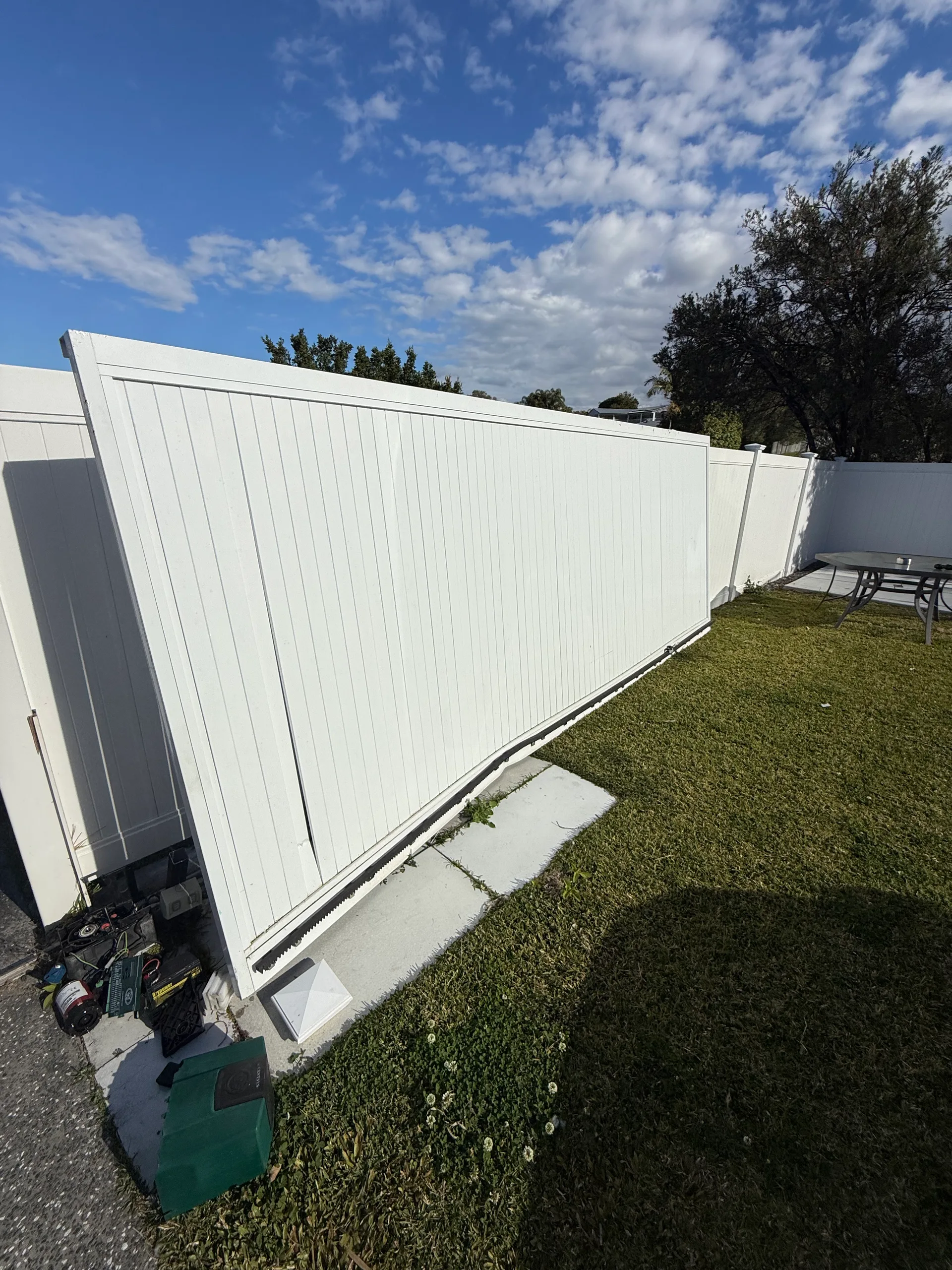
A sliding gate that's come off its track is one of the more alarming faults a homeowner can come across — the gate might be leaning, jammed at an angle, or simply refusing to move with a visible gap between the wheel and the track. It's also one of the few gate faults where the safest first step is genuinely to do nothing except call for help, rather than attempt to fix it yourself.
This guide covers why sliding gates come off track, what's safe to check, and — importantly — who to call, since the gate itself and the motor that drives it are two different jobs.
What the Problem Looks Like
A few different presentations, worth distinguishing because they point to different causes:
- The gate has visibly slipped sideways or is leaning, with a gap between the bottom of the gate and the track it normally runs in.
- The gate moves but scrapes, grinds, or drags along the ground or track.
- The gate has stopped moving entirely and looks jammed or twisted.
- One end of the gate is noticeably lower than it should be.
It's worth knowing there are two common types of automatic sliding gate. A track-mounted gate runs on a wheel that sits inside a ground-level track, guided by rollers or guide posts at the top. A cantilever gatedoesn't touch the ground at all — it's fully supported by rollers mounted on posts either side of the opening. Track-mounted gates are the type that can literally derail from a ground track; cantilever gates can't come off a ground track because there isn't one, but they can still come off their support rollers if those wear out or the support posts shift.
Most Common Causes
Worn or Damaged Rollers and Wheels
Rollers take the full weight of the gate every time it moves, and like any wearing part, they eventually flatten, crack or seize. A worn roller is one of the more common reasons a gate gradually starts riding lower and eventually comes off its track or guide.
Debris in the Track
Sand, dirt and small stones building up in a ground-level track can be enough to lift the wheel out of the groove and cause it to derail, especially once it's compacted in over time. Worth checking on any property where the driveway isn't fully sealed.
A Warped, Bent or Loose Track
A vehicle clipping the track, general age, or the mounting bolts working loose over years of vibration can all leave the track no longer sitting flat or straight, which makes the gate progressively harder to keep aligned.
Guide Posts or Rollers Out of Alignment
The guide rollers or posts that keep the top of the gate running straight — rather than swinging in and out — can shift, loosen or wear, letting the gate rock enough to eventually jump the track.
Impact damage is another common one — a vehicle clipping the gate, or the gate being forced past an obstruction, can knock it off track suddenly rather than gradually. If your gate has come off track more than once, that repeat pattern is usually a sign of one of the underlying causes above rather than bad luck.
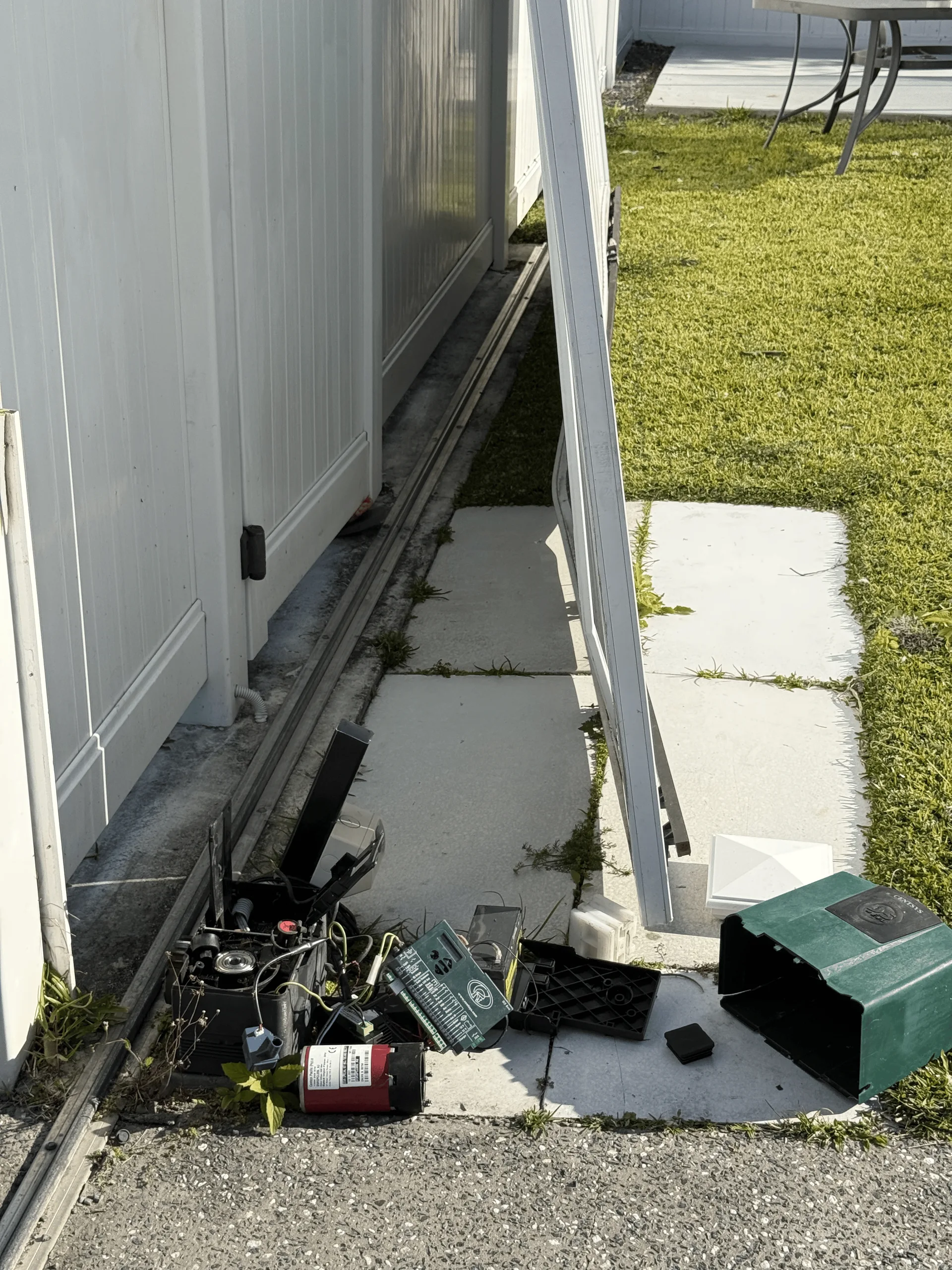
A gate off its track often brings the motor and automation down with it — here the drive unit and control board have had to come off the track entirely before the gate itself could be assessed.
Checks You Can Safely Perform
There's genuinely less you should physically do here than with most gate faults, but a few things are safe and useful:
- Have a look at the track for obvious debris — sand, stones, leaf litter — and clear loose material with a broom if it's easy and safe to reach, without trying to move the gate itself while doing so.
- Note whether the gate came off gradually (you've noticed it scraping or riding low for a while) or suddenly (after a vehicle knock) — useful information for whoever assesses it.
- Check whether the gate is a track-mounted or cantilever type, since it changes what's actually being assessed.
- If the gate has a manual release and it's safe to reach without pushing or forcing the gate itself, you can put it into manual mode and leave it stationary rather than letting the motor keep trying to drive a misaligned gate.
Don't Try to Push It Back On Yourself
Don't attempt to lift, push or force a derailed sliding gate back onto its track yourself, and stop immediately if the gate is leaning or looks like it could tip, any part of it is near a footpath, road or driveway, children or pets are nearby, or the motor is straining or grinding loudly. Sliding gates are heavy, and a derailed gate that's pushed or lifted incorrectly can fall. This isn't a job to attempt solo, even with a second person helping.
Who to Call: the Gate, or the Motor?
A derailed gate is really two possible jobs, and it's worth knowing the difference before you start calling around:
- The gate itself — physically re-hanging it, repairing or replacing the track, rollers or frame — is gate fabrication and hardware work. That's a job for a gate fabricator or specialist, not something Fortex does; our work starts once the gate is sitting correctly.
- The motor and automation — if a derailment has also strained or damaged the motor, knocked the safety sensors out of alignment, or thrown the limit switch settings out, that's exactly what Fortex's gate motor repair service covers. It's common for both to happen at once, so if you're not sure which you're dealing with, a phone call is the fastest way to find out.
If your gate is off track and you're not sure whether it's a hardware problem, an automation problem, or both, call Fortex on 0434 099 873and describe what you're seeing — we'll tell you honestly whether it's something we can assess, or whether you need a gate fabricator out first.
How the Issue Can Be Prevented
Regularly clearing sand, dirt and debris from the track goes a long way, particularly on driveways that aren't fully sealed. A periodic check of the rollers, guide posts and track alignment can catch wear before it causes a derailment, and it's worth addressing an early warning sign — a scraping sound, the gate riding slightly low, more resistance than usual — as soon as you notice it rather than waiting for a full failure.
Frequently Asked Questions
Can I push my sliding gate back onto its track myself?
We wouldn't recommend it. Sliding gates are heavy and a derailed gate can be unstable — attempting to lift or force it back into place risks the gate falling or the fault getting worse. Isolate power if it's safe to do so and call a gate specialist.
Why does my gate keep coming off the track?
Repeated derailment usually points to an underlying cause — worn rollers, a warped or loose track, misaligned guide posts, or a track that's shifted — rather than bad luck. It's worth having the root cause looked at rather than just pushing it back on each time.
What's the difference between a track and cantilever sliding gate?
A track-mounted gate runs on a wheel inside a ground-level track and can physically derail from it. A cantilever gate is fully supported by rollers on posts and never touches a ground track, though it can still come off its support rollers if they wear out or the posts shift.
Does Fortex fix a derailed sliding gate?
Fortex handles the motor, automation, sensors and control system on your gate. Getting the gate itself physically back on track — the frame, wheels and track — is gate fabrication and hardware work, which is outside what we do. If the derailment has also affected your motor or sensors, we can assess and repair that side once the gate itself has been sorted by a gate fabricator or specialist.
Is a derailed gate a safety hazard?
It can be. A heavy gate that's off its track can be unstable, and forcing it back into position incorrectly is a genuine injury risk. Treat it as a leave-it-and-call-someone situation rather than something to push through.