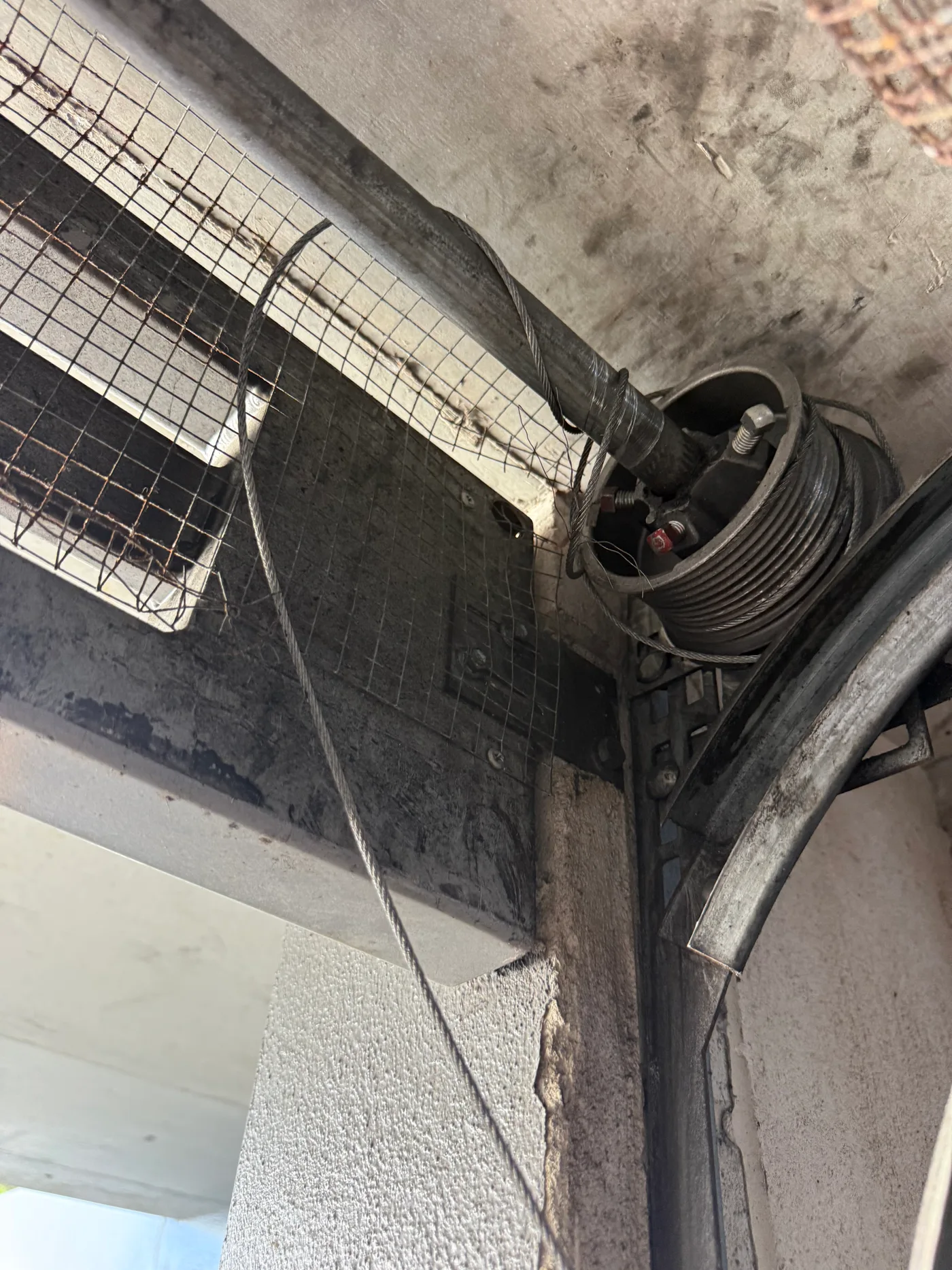
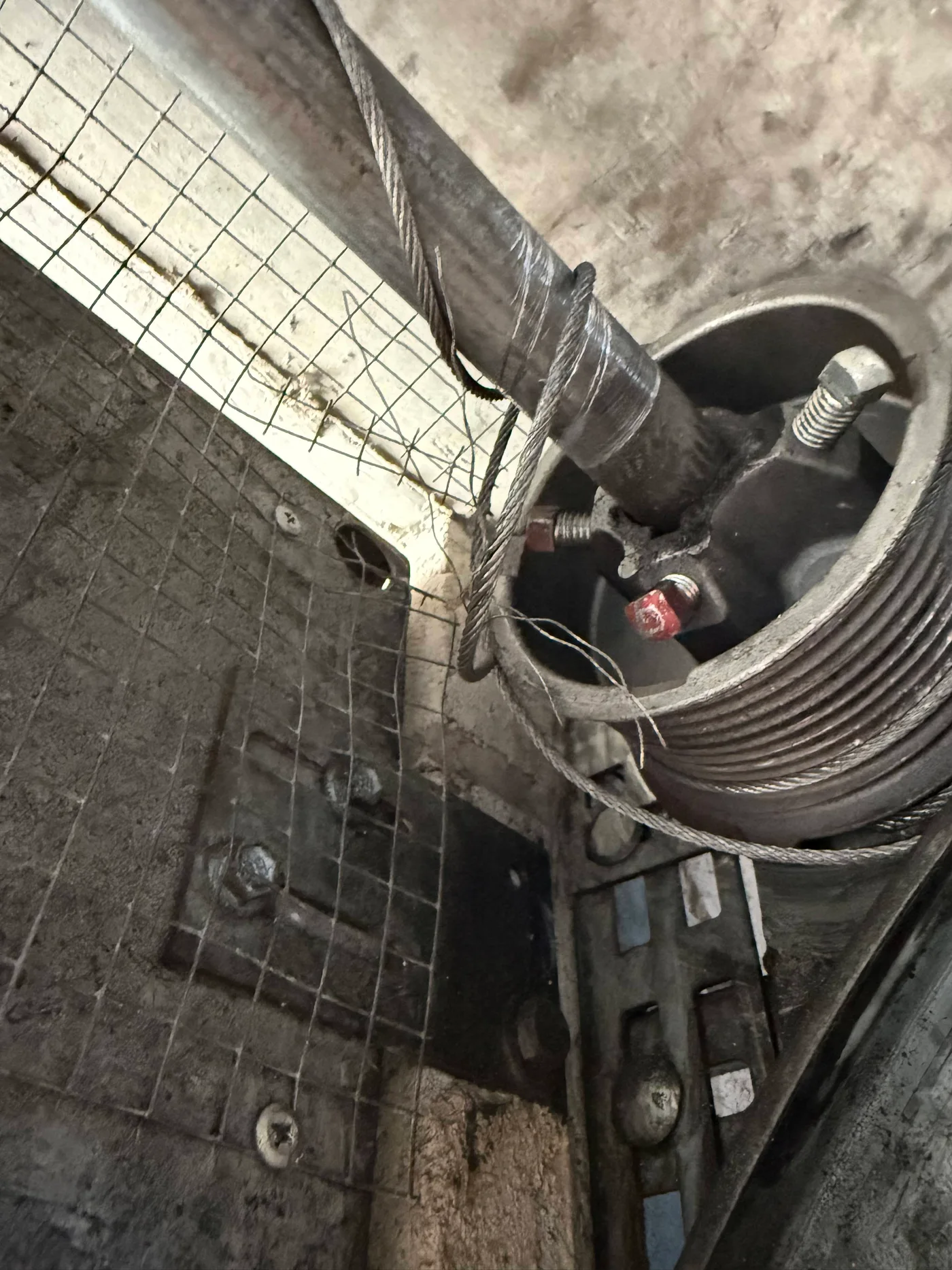
Cables Are a Professional Repair
Garage door cables are under spring tension. Never attempt to handle, rewind or replace cables yourself. Call a licensed technician.
Cables are the link between your door's spring system and the door panels themselves. Each cable runs from the bottom corner of the door up to a drum at each end of the torsion bar, transmitting the spring's stored energy to lift the door. When a cable fails — whether from fraying, corrosion, or slipping off the drum — the door loses counterbalance on one or both sides, creating a safety hazard and potentially damaging the panels, motor and tracks.
Warning Signs of Cable Problems
Door sits unevenly
HighOne side of the door is lower than the other. This almost always means one cable has snapped or come off its drum.
Door hangs at an angle
HighVisible tilt when door is closed or during operation. Stop using the door immediately.
Loose cable visible
HighA pile of cable at the bottom of the track or visible cable hanging free from the drum.
Grinding or jerking
MediumCable partially off the drum causes the door to travel unevenly or grind on one side.
Visible fraying
MediumIndividual strands visibly broken or separated along the cable length.
Surface rust on cable
Low-MediumEarly corrosion. Coastal properties may see this within 5–8 years. Lubricate and monitor closely.
What Causes Cable Failure on the Gold Coast
Coastal corrosion
Salt air accelerates corrosion of the individual steel strands within the cable. Cables in beachside suburbs may fail in as few as 5–7 years, compared to 10–15 years in inland areas. The corrosion starts inside the cable where strands contact each other and is not visible until significant damage has occurred.
Spring failure creating sudden load
When a torsion spring breaks, the sudden loss of counterbalance can place a shock load on the cables beyond their design tolerance. Cables often snap or pull off the drum at the same time as a spring break, even if the cables themselves weren't at end of life.
Cable off the drum
If the cable winds incorrectly onto the drum — due to door misuse, manual operation error, or drum damage — it can slip off the groove and pile up. This is repairable if caught early.
Bottom bracket failure
The cable attaches to a bracket at the bottom corner of the door. If this bracket cracks or the bolt loosens, the cable attachment point fails and the cable pulls free.
Age and cycle fatigue
Like springs, cables are rated for a finite number of cycles. A high-use household completing 5–6 cycles per day will reach this limit in 5–8 years for standard cables.
What Happens During a Cable Repair
Extending Cable Life in Coastal Areas
Frequently Asked Questions
My garage door is crooked or one side is lower than the other — is that a cable problem?
Yes, this is a classic sign that one cable has snapped, slipped off its drum, or lost tension. The door hangs unevenly because one side is still supported and one is not. Do not operate the door — it can damage the panels and tracks further.
Can I continue using my door if a cable is frayed?
No. A frayed cable is close to failure. If the remaining strands snap while the door is in motion or someone is under it, the result can be dangerous. Call a technician before using the door again.
Why do cables only last 5–7 years in some garages?
Coastal conditions, lack of lubrication and misaligned drums all accelerate cable wear. In coastal Gold Coast suburbs, cables can corrode from the inside out — the individual wire strands rust where they contact each other, which isn't visible from outside until significant damage has occurred.
How much does cable replacement cost on the Gold Coast?
The price depends on your door size and cable type, with parts and labour included — both cables are replaced together, as replacing only one is discouraged when both are the same age and condition. Call 0434 099 873 for a fast, free quote; we can usually price it over the phone.